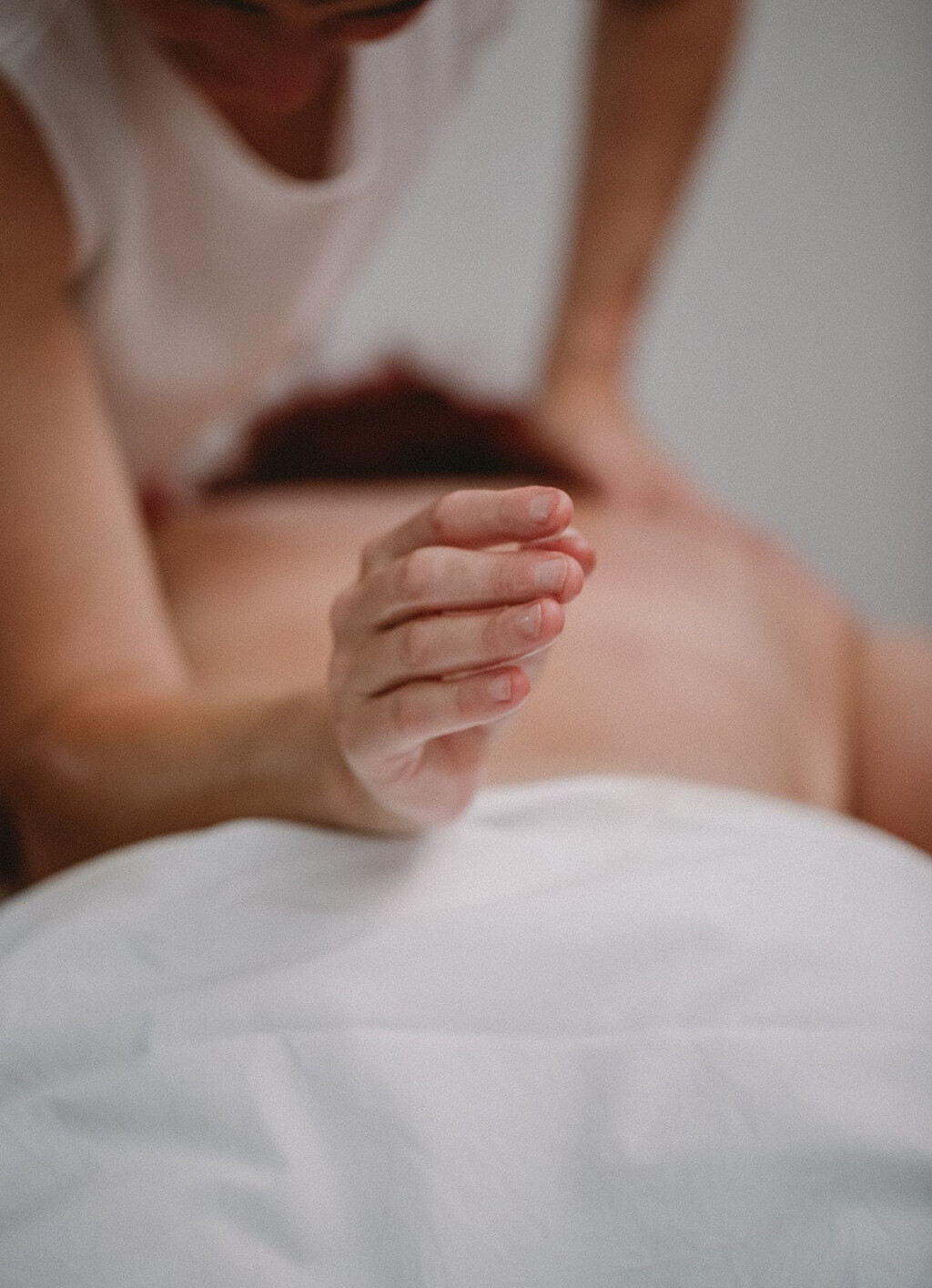
Kahuna Bodywork is a full-body treatment that is often thought of as a type of massage. However, it is a broader holistic healing tradition originating from Hawaii, which is designed to harmonize the body, mind and spirit, while releasing physical, emotional, and energetic tension. As such, Kahuna Bodywork isn't only about working the tension out of your muscles or eliciting deep states of relaxation. It is considered a "return to yourself", to your natural, unburdened state of being and a way to "make right" the relationship between your physical self and your higher self.
In terms of the technique used by Kahuna practitioners, think of this bodywork more as a dynamic, fluid dance performed on the client's body to the rhythm of vibrant and moving music. The practitioner uses forearms, hands and elbows in long, deep, flowing strokes that mimic the ebb and flow of the ocean across the length of the body. The bodywork itself can be experienced subjectively in a variety of different ways - subtle, nurturing, compassionate, comforting, grounding, emotive, energetic, transcendent and even transformative. Each session can evoke its own unique experience and deeper healing with each new session.
Types of Kahuna Bodywork offered:
1. Kahuna Bodywork
As described above and with additional detail offered below. Our Kahuna Bodywork rates are as follows:
2. Kahuna Pregnancy Massage
Kahuna Pregnancy Massage is often described by expectant mothers as one of the most nurturing experiences available during pregnancy. It takes the signature "ocean wave" flow of Kahuna Bodywork and adapts it to support the unique physical and emotional shifts of pregnancy. For more in-depth information on Kahuna Pregnancy Massage click here.
3. Polynesian Floor Treatment
Polynesian Floor Treatment is a fully clothed, floor-based bodywork therapy derived from Kahuna Bodywork principles, combining therapeutic deep stretching and deep tissue pressure. It is particularly effective at easing tension in the lower back, hips and shoulders. While massage table work of Kahuna Bodywork feels like being cradled by the ocean, the floor treatment of Polynesian Floor Treatment feels like being integrated into the earth.
Polynesian Floor Treatment takes place on a comfortable, padded mat on the floor. Being on the floor allows for much larger "yoga-like" stretches. The practitioner can use their own body as a fulcrum to move your limbs through a full range of motion and can use gravity to their advantage. For more in-depth information on Polynesian Floor Treatment click here.
What to expect from a Kahuna Bodywork session
The following information applies to Kahuna Bodywork. For more information on what to expect from a Polynesian Floor Treatment click here.
The Kahuna Bodywork session often begins with a moment of stillness or a gentle chant to set the practitioner's intention for the bodywork. The practitioner may place their hands on your back or head to establish a healing connection. Unlike a clinical massage, there is a distinct sense that you are entering a "sacred space."
Expect to feel a lot of oil (usually fractionated coconut oil) and much less draping. The use of draping is often modified to expose more of the body to allow for the practitioner's long, sweeping movements that trace the entire length of the body. However, modesty and dignity is subtly preserved with the careful placement of sarongs. Clients are encouraged to communicate their comfort level at all times.
Unlike other styles of massage where the therapist stands relatively still, a Kahuna practitioner moves continuously and dynamically around the massage table in a style akin to a flowing dance or martial arts. This movement starts at the beginning of the bodywork with a Kahuna dance called "flying" and this Ka’alele au ("flight of the ibis.") continues throughout the therapeutic session. While it looks like a beautiful dance, it is actually a functional martial art form. The practitioner isn't just moving for aesthetics; they are using their entire body as a pendulum to generate the momentum needed for those long, deep strokes across your body without straining their own muscles.
You will sometimes hear your Kahuna practitioner making a soft "Haaa" sound that sounds like a deep sigh. In Kahuna Bodywork, the sounds a practitioner makes are not random noises. They are tools used to move energy and maintain the high-vibration environment required for the work. When your Kahuna practitioner vocalizes "Haaa" it also serves as a subconscious invitation for you to join them in a state of release. It signals to your nervous system that it is safe to let go of the "breath-holding" we often do when we are stressed. You may also occasionally hear the practitioner making a brisk "Sshhh" sound. This is used to "clear the air" around the body. If a practitioner feels a lot of "heavy" energy being released from your muscles or fascia, they may encorporate the "Sshhh" sound to "brush" that energy away from the table.
In addition to hearing your practitioner's occasional breath sounds you may sometimes hear them humming or singing along to the music. When a Kahuna practitioner begins to hum or sing, they aren't just "enjoying the music"—they are utilizing a tool called vibrational resonance. By humming or singing, the practitioner creates a stable, harmonious vibration to compliment the healing work. In addition to this, it is worth noting that Kahuna Bodywork is physically intense and requires the practitioner to maintain a deeply connected and energetically engaged state for 60 to 90 minutes. Humming and singing helps the practitioner maintain a continuous "flow state", as well as a consistent, steady breath to regulator their energy.
The intended impact on body and mind
Breaking the "Armor" (Physical Release)
From a Kahuna perspective, muscles aren't just tissue; they are containers for memory. When a practitioner uses long, sweeping strokes, they aren't just rubbing a muscle; they are "washing" the body. By releasing chronic tension in the fascia and joints, the body is encouraged to lets go of the physical "holding patterns" that keep you stuck in the past. When the tension leaves, the "real you" has room to breathe.
Bypassing the Intellectual Mind
Because the movements are rhythmic and continuous, the brain often can't keep track of where the practitioner's hands are. In a standard massage, you might think, "Now they are on my left calf." In Kahuna, the strokes are so long and encompasses so much of the body at once that the analytical mind eventually gives up trying to track it.
This "mental surrender" as the potential to drop you into a meditative state where you can connect with your intuition rather than your to-do list.
